This page is no longer live and was last updated on October 5, 2025. It was run only in the weeks after broadcasters first announced their conditional withdrawals.
The list of broadcasters committed to withdrawing from the Eurovision Song Contest if Israel’s participation continues stands at four.
RTV SLO of Slovenia, RTÉ of Ireland, AVROTROS of the Netherlands, and RTVE of Spain have all issued statements saying they will not compete in Vienna next year if Israel is part of the competition.
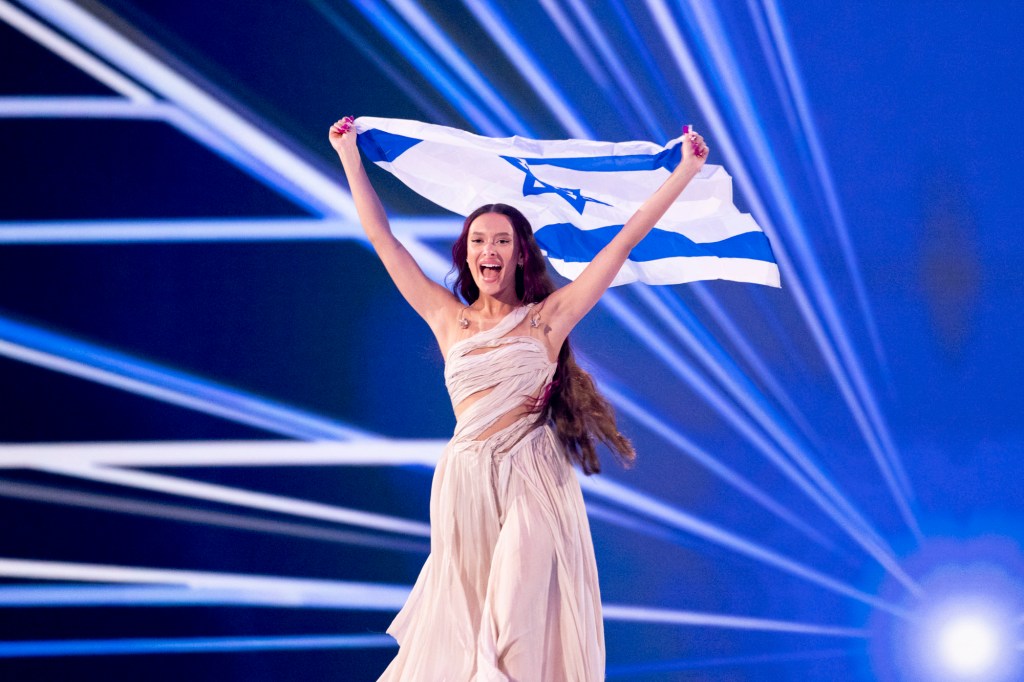
The Euro Trip has contacted a number of broadcasters for comments and/or clarifications on their stance on Israel continuing to be a part of Eurovision.
Follow The Euro Trip’s live page to stay up-to-date on the position of all the participating broadcasters (and those that participated in recent years) in the Eurovision Song Contest.
Click to read the most recent update (October 5, 2025)…
- Stefán Jón Hafstein, Chair of RÚV’s board of directors, wrote in an open letter that Israel should be banned from Eurovision immediately.
In alphabetical order of the name of the country broadcasters represent, this is what we know so far through original reports, fact-checked reports, and official communications from broadcasters:
Australia 🇦🇺
Australia’s broadcaster SBS is an Associate Member of the EBU, and participates in Eurovision through that status.
September 17: SBS confirmed to a number of news and media organisations, including The Guardian, that it “intends” to compete in Vienna next year.
“SBS has been broadcasting the Eurovision song contest for over 40 years, sharing this global celebration of diversity and inclusion with all Australians,” a spokesperson said.
“SBS intends to continue this tradition with its participation in the 2026 Eurovision song contest. The decision regarding Israel’s participation in Eurovision will be made by the EBU over the coming months.”
Belgium 🇧🇪
The organisation of Belgium’s Eurovision participation swaps between French broadcaster RTBF and Flemish broadcaster VRT each year. 2026 is the turn of RTBF.
September 12: A spokesperson for RTBF confirmed to Belgian media that its participation in Vienna “will be made based on the decisions taken by the EBU at its general meeting in December”, but that it is “continuing its preparations for the next competition, including the work of selecting candidates”.
Elsewhere, the news arm of VRT reported that the “Flemish broadcaster has indicated that it shares the position of the countries withdrawing from the Eurovision Song Contest.”
Czechia 🇨🇿
September 18: Czech broadcaster Česká televize declined to comment on the ongoing situation when asked by The Euro Trip.
Denmark 🇩🇰
Denmark’s broadcaster DR is currently preparing to hold it’s national selection programme for Eurovision, Dansk Melodi Grand Prix, in the city of Frederikshavn in February.
September 12: On Israel’s inclusion, Senior Editor of DR Culture, Debate and Music, Gustav Lützhøft confirmed to the broadcaster’s news division: “It must be up to the individual country to decide what is right for them. DR is following the situation closely and is discussing it continuously with the other Nordic public service media.”
September 17: Lützhøft gave further comments to DR News, appearing to confirm Denmark’s participation in Eurovision next year.
“Our participation is conditional on there still being a strong international community, security in place and an apolitical framework around the competition,” he said.
“Our participation is neither a support for nor a protest against individual countries, but rather a desire to maintain communities across borders. In a time marked by unrest and division, it is worth reminding each other of the original purpose of competitions like ESC: to create a space where we can meet across differences and disagreements. ESC must be preserved as an apolitical community. DR wants to continue to be a part of this, and we have informed the EBU of this, Gustav Lützhøft continues.”
In a later interview with DR News, Lützhøft reaffirmed the three conditions by which Denmark would compete in Vienna: “We are running on the condition that there is broad support from other European countries. And it is clear that if at some point we find ourselves in a situation where this is no longer the case, it will also have an impact on DR’s participation.”
Additionally, he clarified: “If something changes significantly within one of the three things, it is clear that we will have to reconsider our participation, but for now it is important to state that we intend to stand.”
September 30: Gustav Lützhøft confirmed DR will not vote to exclude Israel from next year’s Eurovision Song Contest.
Speaking to DR News, he said: “DR supports ESC as a cultural European event that has brought nations together through music since 1956.
“It follows that we will not vote for any EBU member to be expelled from the competition, as long as they comply with the rules and regulations.
“DR’s participation in the ESC remains conditional on there being a strong international community, control over security and an apolitical framework around the competition.”
Finland 🇫🇮
The show UMK will take place on the last day of February next year and has been used every year since 2012 to select Finland’s entry to the Eurovision Song Contest.
September 12: Finnish newspaper Helingin Sanomat reported on that broadcaster Yle “has had confidential discussions with the EBU, and the EBU has heard Yle’s views on the future of Eurovision”.
The newspaper reported a quote from Johanna Törn-Mangs , Head of Yle’s Culture and Affairs department, saying “there has been no major discussion leading to a decision so far”.
France 🇫🇷
September 17: France Télévisions confirmed in a social media post its participation in Eurovision 2026. Here is the broadcaster’s full statement:
“France Télévisions is pleased to confirm its participation in the Eurovision Song Contest 2026 on May 16 in Vienna, alongside fellow public service media members of the EBU. The group reaffirms its support for musical creation, to artists and for this unique event.”
Germany 🇩🇪
In Germany, the responsibility for broadcasting the Eurovision Song Contest lies with ARD, with regional broadcaster SWR taking the lead in its organisation. This is SWR’s first year in the organisational role, taking over from NRD which led the participation of Germany since the mid-1990s.
September 16: In a statement given to The Euro Trip on behalf of ARD, a spokesperson for SWR said: “The ESC has been a major musical event for decades, connecting people across Europe and beyond through diversity, respect, and openness, regardless of origin, religion, or beliefs. It is a competition organized by EBU broadcasters, not by governments.
“As a member of the European Broadcasting Union (EBU), ARD supports the consultation process that has been initiated and the decisions to be made by the EBU. The goal is to reach a well-founded and sustainable agreement that aligns with the values of the EBU.”
Greece 🇬🇷
September 17: A source from Greek broadcaster ERT confirmed exclusively to The Euro Trip that it does not have an “official position” at this time and that it is “waiting for the EBU’s decision in December”.
“ERT stands by the official Eurovision slogan United By Music. We affirm that Eurovision is not a political event, and that it unites people from different cultures,” they said.
The source also strongly refuted reports made by British newspaper The Telegraph on September 11 that ERT would support Israel in a vote on the country’s Eurovision future at December’s EBU General Assembly.
Iceland 🇮🇸
September 9: The Director General of Iceland’s broadcaster RÚV, Stefán Eiríksson, spoke to radio station Rás 2 about Israel’s inclusion in the competition.
He did not give an outright commitment for his country to withdraw, but he did express concerns.
“We have serious doubts about the conduct of both the Israeli public broadcaster and the Israeli government when it comes to Eurovision, and we have expressed these concerns within the EBU, that the rules of the competition are being broken.
“I can sense that the landscape is changing quite a bit, but whether it will change in such a way that Israel will be excluded from the contest in the coming weeks or months remains to be seen.
“I think it is likely that if there is no change in EBU’s position and it does not respond to these voices of concern coming from us, from Spain and Slovenia and others, then that will call for reactions from these broadcasters. But let’s just wait and see.”
September 17: The Euro Trip received a full statement from RÚV saying: “RÚV has announced our participation in Eurovision subject to the outcome of the ongoing consultation process within the EBU, due to the participation of the Israeli public broadcaster KAN in the competition.
“RÚV has already made comments on KAN‘s participation in the competition at the EBU level, last at the General Assembly in London in July. We will continue to closely monitor the development of these matters at the EBU level and have reserved the right to withdraw from participation in it if the EBU does not respond satisfactorily.”
October 1: Sky News reported that RÚV had confirmed to it that the broadcaster would boycott Eurovision next year if Israel was involved. This was the first verified report that the broadcaster would withdraw, but RÚV is yet to put out its own direct statement.
October 3: RÚV extended the submission window for its national selection show Söngvakeppnin until the outcome of the vote on Israel’s participation is known.
October 5: Stefán Jón Hafstein, Chair of RÚV’s board of directors, wrote in an open letter that Israel should be banned from Eurovision immediately. This letter was written in his own name, not in the name of the board. He confirmed the broadcaster’s decision in November’s EBU vote will be made on October 28.
Nordic broadcasters will meet in Iceland in the coming days to discuss Israel’s inclusion in Eurovision. The meeting will be overseen by an EBU representative.
Ireland 🇮🇪
September 11: Ireland’s national broadcaster RTÉ committed to withdrawing from Eurovision if Israel continued to participate. Here is its statement in full:
“At the General Assembly of the European Broadcasting Union (EBU) in July, a number of EBU members raised concerns about the participation of Israel in the Eurovision Song Contest.
“RTÉ wishes to thank the EBU for the extensive consultation process that was initiated on foot of that meeting, and the extension of the option to withdraw from participation without penalty to December.
“It is RTÉ’s position that Ireland will not take part in the 2026 Eurovision Song Contest if the participation of Israel goes ahead, and the final decision regarding Ireland’s participation will be made once the EBU’s decision is made.
“RTÉ feels that Ireland’s participation would be unconscionable given the ongoing and appalling loss of lives in Gaza. RTÉ is also deeply concerned by the targeted killing of journalists in Gaza, and the denial of access to international journalists to the territory, and the plight of the remaining hostages.”
Italy 🇮🇹
September 23: Italy’s biggest news agency ANSA, newspaper Repubblica, and other media outlets reported the request of three directors of Italian broadcaster Rai for Italy to follow other broadcasters in withdrawing from Eurovision should Israel participate in 2026.
Alessandro di Majo, Davide Di Pietro and Roberto Natale from the seven-strong board of directors said: “Five public broadcasters have already decided in recent weeks not to participate if Israel takes part in the demonstration. We ask Italy to do the same, giving a concrete sign of support to a people subjected to extermination.”
Lithuania 🇱🇹
September 17: A spokesperson for Lithuanian broadcaster LRT confirmed to The Euro Trip that it is “monitoring discussions within the EBU”. Here is the broadcaster’s full statement:
“We are aware of this matter and are actively monitoring the discussions within the European Broadcasting Union (EBU). Once the EBU makes a decision, LRT will promptly communicate its position.”
Malta 🇲🇹
September 16: Malta’s Minister of Culture, Owen Bonnici, spoke to Times of Malta about the issue of Israel’s inclusion in Eurovision, but did not call on the national broadcaster to withdraw.
“I believe the Eurovision is a place of dialogue,” he said. “Although I completely criticise the actions of the Israeli government, I believe that the window of dialogue should always be open.”
The Euro Trip has reached out to broadcaster PBS for a comment.
Netherlands 🇳🇱
September 12: The Netherlands’ participating broadcaster AVROTROS followed RTÉ one day later by delivering its own ultimatum to the EBU. Here is the broadcaster’s statement in full:
“In recent months, AVROTROS has engaged in regular consultations with the EBU and other European public broadcasters regarding the future and nature of the Eurovision Song Contest. These discussions have also given extensive consideration to whether Israel can be represented under the current circumstances.
“The Eurovision Song Contest was founded in 1956 to bring people together after a period of deep division and war. Since its inception seventy years ago, music has been at the heart of the Contest as a unifying force, with peace, equality, and respect as its core values.
“AVROTROS can no longer justify Israel’s participation in the current situation, given the ongoing and severe human suffering in Gaza. The broadcaster also expresses deep concern about the serious erosion of press freedom: the deliberate exclusion of independent international reporting and the many casualties among journalists. In addition, there is proven evidence of interference by the Israeli government during the most recent edition of the Eurovision Song Contest, in which the event was used as a political instrument. This runs counter to the apolitical nature of the Contest. These circumstances are incompatible with the values represented by AVROTROS as a public broadcaster.
“The broadcaster has therefore decided that participation by AVROTROS in the Eurovision Song Contest 2026 will not be possible as long as Israel is admitted by the EBU. Should the EBU decide not to admit Israel, AVROTROS will gladly take part next year. Pending that decision, all preparations will for the time being continue as planned.”
September 30: AD of the Netherlands reported the reaffirming by AVROTROS that it will boycott next year’s contest, even if a ceasefire between Israel and Hamas forces is agreed.
Norway 🇳🇴
Norway’s national broadcaster NRK selects its act for Eurovision through Melodi Grand Prix, and preparations for that show are ongoing.
September 12: The Euro Trip was given a statement signed by NRKs Content Editor, Charlo Halvorsen, in which he said the broadcaster “maintains its decision to participate” and that it “trusts the process and await the EBU’s conclusion in December”.
Here is the statement in full:
“The EBU is currently conducting an extensive consultation process among its members. The purpose is to gather views on how the EBU should address both participation in the Eurovision Song Contest and the geopolitical tensions surrounding the competition.
“NRK is actively participating in this process, in which the EBU will carry out a thorough review with all member countries at the beginning of December.
“At present, NRK maintains its decision to participate in the Eurovision Song Contest. We trust the process and await the EBU’s conclusion in December.
“Following this year’s final, we have been clear about our concerns regarding confidence in the voting and safety at the event. We will continue to raise these issues with the EBU.”
September 17: Three NRK executives, including Director General Vibeke Fürst Haugen and Charlo Halvorsen, spoke to Norway’s Aftenposten about the broadcaster’s current concerns.
They confirmed that broadcasters in the EBU have been asked to find a “concrete position on whether the Israeli broadcaster’s participation in Eurovision damages the competition’s reputation”.
The NRK executives also believe the proven instances of the Israeli government to influence the results of Eurovision “challenges the credibility of the competition” and they’re imploring the EBU to change the voting system to to make it “more difficult to manipulate”.
Another key area of concern for NRK is the safety of its staff and artists at Eurovision, so it has demanded the EBU to “create a safe environment for artists” at the contest.
September 25: Sources close to NRK confirmed to The Euro Trip the broadcaster is likely to withdraw from Eurovision should Israel be allowed to participate in 2026.
Portugal 🇵🇹
September 17: Portugal’s participating broadcaster RTP declined to comment when approached by The Euro Trip.
Slovenia 🇸🇮
Slovenia’s broadcaster RTV SLO has been a trailblazer on presenting the case against Israel’s inclusion in Eurovision for the last 18 months, and it is one of the participating broadcasters not willing to share the stage with an Israeli entrant in 2026.
September 12: Natalija Gorščak, President of the Board of RTV SLO, said “will not cooperate if Israel cooperates”.
This follows up comments made by Ksenija Horvat, Director of RTV SLO, on September 4. She said “If we can’t agree on an appropriate system of cooperation, then we won’t be there”.
The broadcaster also made its position clear at the EBU’s General Assembly held in London in July. The broadcaster’s press department reported that “if Israel were to participate in the Eurovision Song Contest – due to the genocide in Gaza – it would not participate in the competition”.
Spain 🇪🇸
Spain’s broadcaster RTVE was the fourth to commit to a withdrawal based on Israel’s continued participation in Eurovision, and the first of Eurovision’s ‘Big 5’ broadcasters which contribute the most financially to the running of the event.
September 15: Spain’s Minister of Culture, Ernest Urtasun, doubled down on comments he had made the previous week, urging the broadcaster to withdraw. “We have to ensure that Israel does not take part in the next edition of Eurovision. If we do not succeed in expelling Israel, Spain should not participate,” he told Spanish radio.
The country’s Prime Minister Pedro Sanchez also piled on pressure, saying: “Israel cannot continue to use any international platform to whitewash its image”.
September 16: The Chair of RTVE, José Pablo López, proposed a vote on the broadcaster’s participation. It was voted through an absolute majority of the RTVE Board of Directors that the broadcaster would follow RTV SLO, RTÉ and AVROTROS.
Sweden 🇸🇪
September 11: The Guardian newspaper reported that Swedish broadcaster SVT “was in touch with the EBU”.
On the same day, the broadcaster revealed it had received a record number of submissions to its programme Melodifestivalen, the show SVT uses to select its act for Eurovision each year.
September 26: SVT CEO Anne Lagercrantz spoke to SVT News in an interview about the broadcaster’s position ahead of the November vote which will decide if Israel can participate in Vienna next year.
Lagercrantz outlined three conditions by which SVT would be present at the 2026 contest. There should be broad European support for the competition; the safety of participants and spectators must be guaranteed; and the competition should, as far as possible, be apolitical in accordance with EBU rules.
“SVT is independent – that is one of our cornerstones,” she said.
“We do not take a political position. It is we and no one else who makes the decision about our participation in ESC and the choices we make should not be interpreted as a position for or against any other country’s public service broadcaster or for or against any other country’s participation.”
United Kingdom 🇬🇧
The BBC has not made its stance clear, declining to comment on the situation and referring any media requests about Israel’s involvement in Eurovision to the EBU.
September 15: Director General Tim Davie spoke to the UK’s parliament’s public accounts committee. There he spoke about Israel’s involvement in Eurovision, and ultimately urged the EBU to speed up its process.
“Eurovision has never been about politics, it should be a celebration of music and culture that brings people together.
“At this stage we are supportive of the European Broadcast Union’s work. They are going around discussing with members, working through all the processes by which they would be satisfied to make a decision one way or the other.”
“But at this stage, I’m supporting the European Broadcasting Union’s work, and they need to get on with it.”
September 17: Tim Davie spoke to BBC Radio 4’s The Media Show and confirmed the BBC would “make a decision” after the EBU concludes its ongoing work.
When host Katie Razzall put it to him that her understanding was that “the BBC would still be involved”, he said: “The European Broadcasting Union hosts Eurovision. They are doing a review on what is the right position in terms of entries that come from broadcasters, what assurances do they need, and who can compete, and we’re going to let them do their work, and then make a decision.”
The EBU’s response
The EBU has issued largely the same statement a number of times since September 12.
“We understand the concerns and deep-seated views surrounding the ongoing conflict in the Middle East. We are still consulting all EBU members to gather views on how we handle participation and geopolitical tensions surrounding the Eurovision Song Contest.
“Broadcasters have until mid-December to confirm whether they wish to participate in next year’s event in Vienna. It is up to each member to decide whether they wish to participate in the competition and we will respect any decision made by broadcasters.”
This is a live page and updates will be added to it based on fact-checked reports and official communications from broadcasters. It was last updated on October 5, 2025.
 The Euro Trip Podcast
2 Comments Add yours